
One of the gifts of Montessori education is that we can truly focus on the whole child —cognitive, social, emotional, and physical. Our approach is not just about academics but also about nurturing life skills, emotional intelligence, and social relationships. The Montessori approach to child development revolves around the understanding that children are naturally curious, care deeply about others, and can be intrinsically motivated. When provided with the right environment,...
Read More
At the heart of Montessori education is a deep respect for human potential. The core of Montessori philosophy and practice originated when Dr. Maria Montessori, as part of her medical school training, worked with children who had developmental delays. Dr. Montessori observed that the children needed something different, so she provided them with materials and an environment that truly supported their development. The result? The children demonstrated remarkable growth. This...
Read More
In our culture, we often think of “will” in terms of willpower—gritting our teeth to do something difficult or pushing ourselves to achieve a goal. But in the Montessori approach, the will is something far more profound. We understand that, rather than being about discipline or determination, the will is the very force that propels children forward in life, guiding them from unconscious action to conscious choice. In Montessori, supporting...
Read More
In Montessori education, we emphasise community, not just as an abstract concept, but as a lived daily experience. From the very beginning of life, we emphasise carefully prepared environments that foster a deep sense of belonging and connection. What Is Community? The word community comes from the Latin communis, meaning “common, public, general, or shared by all or many.” In addition to shared space, in Montessori, we also think about...
Read More
At FMS, our teachers facilitate your children’s growing independence, confidence, capability and real-world application of everything they learn at school. But there’s just so much to learn, and children never stop learning, even at home. This is why we love sharing ‘Montessori at Home’ with families in our community, so you can engage with and extend your child’s education, develop strong relationships with your children, and establish your unique community…
Read More
In order to be truly free, we need to be able to make our own choices, which means having the skills and abilities to then act upon our choices. Without independence, we can’t truly be free. As children’s independence grows, so does their opportunity for freedom. They have more choices available and more to consider. The freedom children experience in our prepared learning environments is directly related to their independence.…
Read More
Think of a time when you did an activity because you wanted to do it–maybe weeding your garden, reading a book, taking a walk, or rearranging your bedroom. Your motivations arose entirely from within you. You likely felt pure joy or satisfaction in the very act of what you were doing. In these activities, you may have also felt a sense of meaning or purpose. Or maybe you felt like…
Read More
The Montessori method of education was born from Dr. Montessori's scientific observations as she explored how to support children’s optimum development. In her studies, Dr. Montessori found that children need a block of uninterrupted time to go through cycles of focus and consolidation. Children aged two and a half and older need at least three hours to move through rhythms of focus. Often, the most growth and meaningful work happens…
Read More
Visit any Montessori environments and you’ll immediately notice a stunning display of colorful glass beads hanging in an open cabinet. Children (and adults!) are drawn to the order and elegance of the bead chains. Beyond their initial aesthetic appeal, the bead chain material offers an amazing array of intellectual opportunities for young children to those in their primary years.Colour-coding One of the brilliant aspects of the Montessori mathematics materials is…
Read More
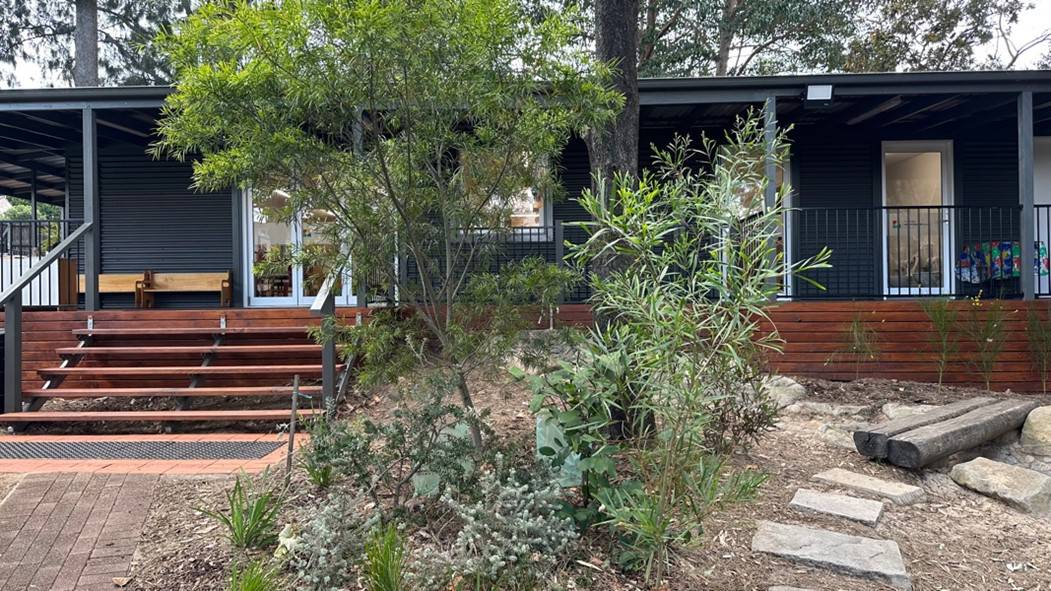
It was exciting to see the children's faces as they stepped into their new Buran environment on Tuesday morning. Buran, means Stringybark in Wannangini (Guringal) language. Uncle Neil, a local Elder advised us on all the naming of our environments.Our new children’s House has been part of our strategic plan to refresh and redevelop our facilities. The brief began with the words from Maria Montessori: ‘The child should live in…
Read More

